Essential rules and preparations for safe mountaineering
Essential Guidelines
Mountaineering is a serious sport that requires proper preparation and discipline. Here are some general guidelines that every mountaineer should follow.
These guidelines are based on decades of mountaineering experience and are designed to ensure your safety and the preservation of mountain environments.
Step 1: Preparation
Proper preparation is the foundation of a successful and safe mountaineering experience. This involves both physical conditioning and mental preparedness.
Start with smaller peaks to build experience before attempting major climbs. Document every climb to track your progress and learn from each experience.
Step 2: Essential Gear
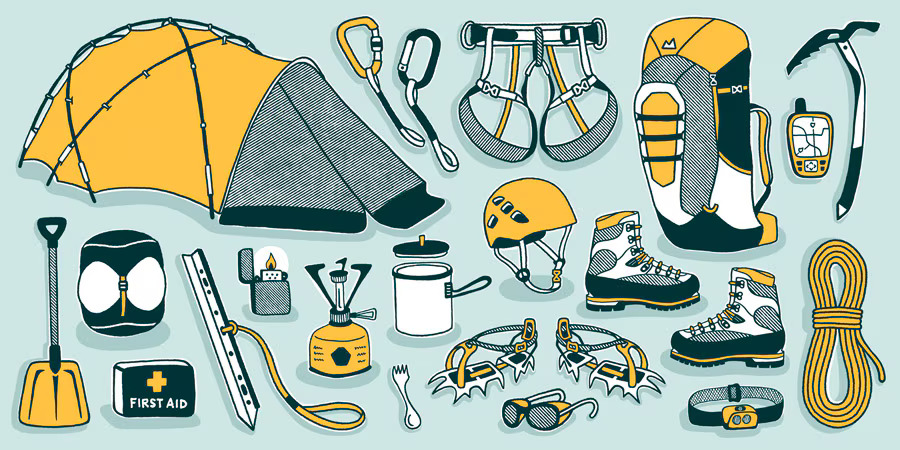
Never compromise on essential gear. Your equipment can mean the difference between success and failure, safety and danger.
Essential for route finding and preventing disorientation.
Critical for safety on technical terrain.
Layering system for temperature regulation.
For unexpected emergencies and overnight stays.
Step 3: Safety & Ethics
Safety and ethical conduct are paramount in mountaineering. Following these guidelines protects both climbers and the mountain environment.
Always climb with a partner. Look out for each other's safety. Never climb alone—always maintain visual or verbal contact with your partner.
Do not leave trash on the mountains. Keep the environment clean and beautiful. This is an ethical responsibility of every mountaineer. Pack out all waste, including human waste when possible.
Reaching the summit is not mandatory. If the weather turns bad, or you're tired, the best decision is to return safely. The mountain will always be there another day.
Carry necessary communication devices (like satellite phones) to stay in touch with your base camp or rescue team. Establish check-in times and emergency protocols.
Observe animals from a distance and never feed them. Store food securely to prevent attracting wildlife to camping areas.
Carry a personal locator beacon (PLB) or satellite messenger. Know basic first aid and wilderness medicine. Have an emergency evacuation plan.
Learn from seasoned climbers before attempting technical routes solo.
Take courses and practice skills regularly. Mountaineering knowledge is perishable.
For more detailed information on specific techniques and hazards:
Sports & Competitions
Mountaineering is not just an adventure sport but also includes various competitive disciplines and recognized sporting events at national and international levels.
Competitive climbing against the clock on standardized routes. The fastest ascent wins.
Competitions in alpine environments focusing on speed, technical difficulty, and style of ascent.
Mountain running at altitudes above 2,000m where the incline exceeds 30% and the climbing difficulty does not exceed II° UIAA.
Now an Olympic sport, includes three disciplines: Lead, Speed, and Boulder. While primarily on artificial walls, the skills translate directly to mountaineering.
Competitive ice climbing on artificial or natural ice formations. Includes both speed and technical difficulty competitions.
Final Checklist
Run through this checklist before every climb to ensure you're fully prepared.